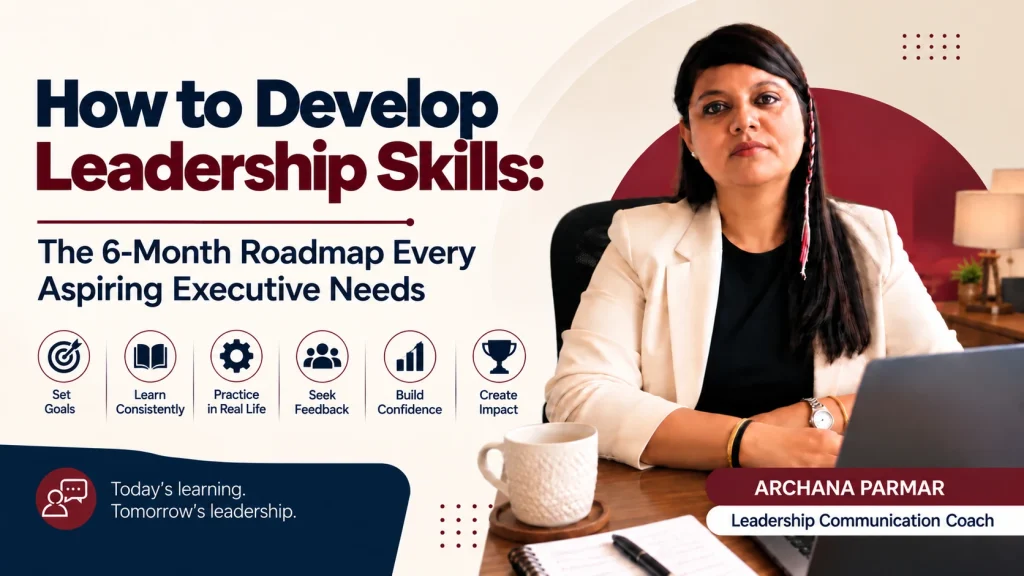
A leadership skills development program can help aspiring leaders develop the behaviours required for their next role.
Most people don’t wake up one morning and suddenly become leaders.
They gradually become leaders.
A project becomes larger. Their responsibilities expand. They start managing people. They are invited into more senior meetings. Their decisions begin affecting people outside their immediate team.
And then something interesting happens.
The skills that made them successful are no longer sufficient.
Being technically strong isn’t enough.
Working hard isn’t enough.
Being the person with all the answers isn’t enough.
At some point, leadership becomes less about what you can personally accomplish and more about your ability to influence how other people think, decide and act.
That is why leadership skills development needs to go beyond learning a collection of competencies.
It requires a deliberate shift in behaviour.
If you are preparing for a larger leadership role, here is a practical six-month roadmap.
Month 1: Build Self-Awareness Before Building Influence
Leadership starts with understanding your own patterns.
How do you behave when challenged?
Do you become defensive?
Do you over-explain?
Do you withdraw?
Do you become overly directive?
Do you avoid disagreement?
Do you speak quickly when you are under pressure?
These behaviours are often invisible to us because they happen automatically.
Yet they shape how other people experience our leadership.
Framework: The Leadership Gap
Ask yourself three questions:
How do I currently show up?
How do others need me to show up?
What is the gap between the two?
For example:
A leader may currently be perceived as highly knowledgeable but not particularly influential.
Their desired leadership identity may be someone who is seen as strategic and decisive.
The development gap might therefore not be “learn more.”
It might be:
Translate expertise → strategic point of view → confident communication.
That is a much more useful development target.
Practice
For one month, observe yourself in meetings.
After each significant interaction, record:
- What did I intend?
- What did I actually communicate?
- What response did I get?
- What might I do differently next time?
Don’t judge the behaviour yet.
First, notice it.
Month 2: Develop Executive Communication
Once you understand your patterns, work on how you communicate your thinking.
One of the biggest transitions in leadership is moving from explaining to framing.
An expert might say:
“There are several things we need to consider…”
An emerging executive might say:
“My recommendation is X. There are two reasons.”
The second person isn’t necessarily more knowledgeable.
They are making their thinking easier to access.
Framework: Point → Reason → Evidence → Action
Use this structure when communicating a recommendation.
Point: What do you recommend?
Reason: Why?
Evidence: What supports your view?
Action: What needs to happen?
For example:
“I recommend delaying the launch by two weeks. Our biggest risk is customer support capacity rather than product readiness. The last release increased support volume by 18%. I recommend we use the additional two weeks to close that capacity gap.”
This is one of the simplest effective leadership skills to practise because it forces you to lead with judgment rather than information.
Practice
Take one complex issue every day and explain it in:
60 seconds.
Then:
30 seconds.
Then:
one sentence.
You are training your brain to distinguish between what is important and what is merely available.
Month 3: Learn to Influence Without Authority
This is where leadership becomes fundamentally different from management.
You may have formal authority over your team.
You probably don’t have it over your peers, senior stakeholders, cross-functional partners or customers.
Yet you still need to influence them.
That requires understanding what matters to them.
Framework: Stakeholder → Interest → Concern → Value
Before an important conversation, ask:
Who am I trying to influence?
What matters to them?
What might they be concerned about?
What value does my proposal create for them?
Imagine you are proposing a new technology platform.
Your technology team may care about scalability.
Finance may care about cost.
Operations may care about disruption.
The CEO may care about strategic advantage.
You don’t need four different proposals.
You may need four different frames.
That is not manipulation.
It is audience intelligence.
Practice
Choose three stakeholders you need to influence.
For each, write:
They care about ______.
They are likely to worry about ______.
My proposal helps them ______.
Then adapt your communication accordingly.
Month 4: Master Difficult Conversations
Leadership is tested when conversations become uncomfortable.
Giving feedback.
Challenging a peer.
Addressing poor performance.
Saying no.
Managing conflict.
Holding someone accountable.
The temptation is to either soften the message until it becomes meaningless or become so direct that the other person becomes defensive.
Neither is particularly effective.
Framework: Observation → Impact → Expectation → Dialogue
Instead of:
“You need to communicate better.”
Try:
“In the last two client meetings, the key risks were raised only after the client asked about them. That makes it harder for us to manage expectations. Going forward, I need those risks surfaced proactively. What is getting in the way?”
Notice what happens here.
You have been clear about the behaviour.
You have explained the impact.
You have established an expectation.
And you have left room for dialogue.
That combination creates accountability without unnecessary aggression.
Practice
Don’t wait for the perfect difficult conversation.
Start with one small conversation you have been postponing.
The goal isn’t to make it comfortable.
The goal is to make it constructive.
Month 5: Develop Persuasion and Strategic Storytelling
Influence often fails because leaders present information without creating meaning.
You can have ten slides of data and still fail to persuade.
Why?
Because people don’t make decisions based on information alone.
They interpret information through priorities, experience, incentives, risk and emotion.
Framework: Context → Tension → Insight → Direction
Start with the context.
Then identify what has changed or what is at stake.
Present the insight.
Then tell people what you recommend doing.
For example:
“Our customer retention has remained stable for three quarters. But the pattern underneath the number has changed. Enterprise customers are staying while smaller accounts are leaving faster. That suggests the issue isn’t overall retention—it is the value proposition for our smaller segment. I recommend we test a different onboarding model before investing further in acquisition.”
Now the data has a story.
And the story has a decision attached to it.
Practice
Once a week, take a piece of business data and turn it into a two-minute story.
Ask:
What happened?
Why does it matter?
What should we do about it?
This is one of the most transferable leadership skills development exercises you can practise.
Month 6: Build Leadership Identity and Executive Presence
The final month is not about adding another communication technique.
It is about integration.
By this stage, you should be asking:
How do I want to be experienced as a leader?
Perhaps you want to be known as:
- Calm under pressure
- Strategic
- Decisive
- Curious
- Fair
- Courageous
- Clear
- Commercially astute
Choose three.
Then ask:
What behaviours would make those qualities visible?
If you want to be seen as strategic, stop getting pulled into every operational detail.
If you want to be seen as decisive, make recommendations rather than simply presenting options.
If you want to be seen as collaborative, ask for perspectives before announcing conclusions.
Leadership identity becomes credible when it is translated into repeated behaviour.
The 8 Leadership Skills That Matter Most
Across these six months, eight capabilities begin to emerge.
1. Self-awareness
Know your patterns, triggers and communication habits.
2. Clarity
Make complex thinking easy to understand.
3. Listening
Understand before attempting to influence.
4. Influence
Move thinking without relying solely on authority.
5. Persuasion
Connect your message to what matters to the audience.
6. Assertiveness
Express your position clearly without becoming aggressive.
7. Emotional regulation
Stay effective when challenged or under pressure.
8. Adaptability
Change your communication approach without compromising your values.
These are not isolated competencies.
They reinforce one another.
You cannot influence effectively if you don’t listen.
You cannot persuade effectively if you don’t understand the audience.
You cannot communicate authority if you cannot regulate yourself under pressure.
And you cannot adapt if you aren’t aware of your own default patterns.
A Simple Leadership Development Scorecard
At the end of each month, score yourself from 1–5 on:
| Capability | Current Score | Evidence |
|---|---|---|
| Clarity | /5 | |
| Executive presence | /5 | |
| Listening | /5 | |
| Influence | /5 | |
| Persuasion | /5 | |
| Difficult conversations | /5 | |
| Emotional regulation | /5 | |
| Adaptability | /5 |
The important word is evidence.
Don’t score yourself based on how you feel.
Ask:
“What happened in the last month that demonstrates this?”
A leader who says, “I think I’m more confident,” has an opinion.
A leader who says, “I challenged a senior stakeholder’s assumption in a meeting, stayed composed, stated my recommendation, and the group adopted the revised approach,” has evidence.
Development becomes much more meaningful when it is observable.
The Real Leadership Development Question
There is a tendency to approach leadership development as an accumulation exercise.
Learn more.
Read more.
Attend another programme.
Develop another competency.
But leadership growth isn’t always about adding something.
Sometimes it is about letting go.
Letting go of the need to have the answer.
Letting go of over-explaining.
Letting go of avoiding disagreement.
Letting go of being the expert in every conversation.
Letting go of the belief that influence comes from having the strongest argument.
The next level of leadership often requires a different version of success.
You may have succeeded because you were the person who could solve the problem.
Now you may need to become the person who helps other people solve better problems.
You may have built credibility through expertise.
Now you need to build influence through judgment.
You may have earned recognition by speaking up.
Now you need to know when your most powerful contribution is a question.
That is the real work of leadership skills development.
Not becoming a different person.
Becoming more intentional about the leader you are already becoming.
Because leadership is not conferred by a title.
The title gives you authority.
How you communicate determines how much of that authority becomes influence.
And influence is what moves people, decisions and organisations forward.
Archana Parmar
Leadership Coach: Influence and Persuasion